
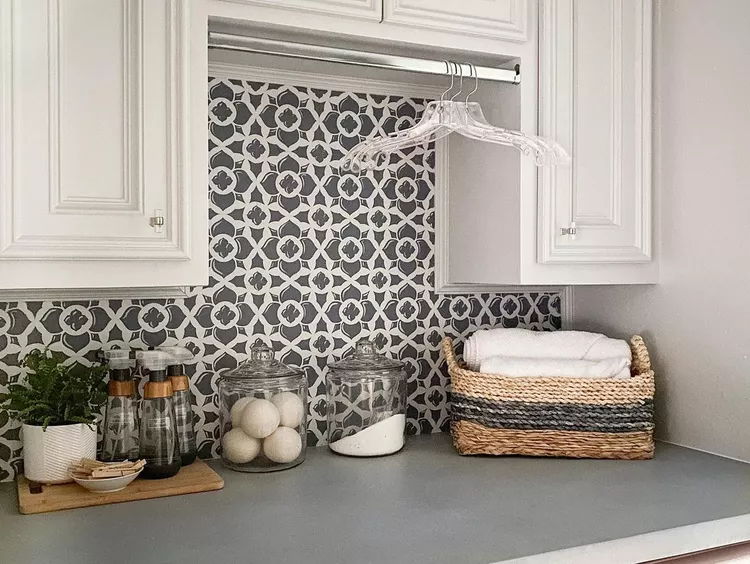
Tiny laundry rooms often have more unused space than they appear to have. The missing storage is usually above the washer, dryer, sink, doorway, or folding area rather than at floor level.
Using vertical space can keep detergent, cleaning supplies, towels, baskets, and household extras organized without making the room harder to move through.
Look Above the Machines First
The wall above a washer and dryer is valuable because the floor footprint is already occupied. Shelves or cabinets can turn that blank area into practical storage without reducing walking space.
Homeowners comparing small-space organization ideas may see many clever products, but simple shelving often provides more usable capacity than complicated organizers.
Keep Everyday Items Within Comfortable Reach
Frequently used detergent and stain products belong on lower shelves. Bulk refills, spare towels, or seasonal cleaning supplies can sit higher because they are needed less often.
Avoid creating storage that requires unsafe stretching every time laundry is done.
Use the Folding Zone Twice
A counter above front-loading machines can create a folding surface while the wall above it handles storage. This gives one narrow area several jobs without cluttering the floor.
Ideas from practical home design topics can be useful when planning the layout, but measure carefully before buying cabinets. Appliance doors, control panels, hoses, and ventilation requirements still need enough clearance.
Open shelves create a lighter appearance, while closed cabinets hide visual clutter. The right choice depends on whether easy access or a cleaner look matters more.
| Unused Area | Storage Option | Good For |
|---|---|---|
| Above machines | Cabinets | Detergent and supplies |
| Above doorway | High shelf | Rarely used items |
| Side wall | Narrow shelves | Small containers |
| Under wall cabinet | Hanging rail | Drying clothes |
Make Narrow Walls Work Harder
Even a shallow strip beside a door or appliance may hold hooks, a slim shelf, an ironing-board bracket, or a wall-mounted organizer. Small laundry rooms benefit from storage that follows the wall instead of projecting deeply into the room.
People looking through interior planning resources may be tempted by oversized storage systems. In a tiny utility room, shallow storage is often more functional because it protects the passageway.
Hooks are especially useful for reusable bags, cleaning brushes, lightweight baskets, or clothes awaiting attention.
Common Storage Mistakes in Small Laundry Rooms
Filling every wall can make a small room harder to use. Storage should support the laundry process rather than turning the room into a tightly packed supply closet.
Another mistake is placing heavy products on shelves that are difficult to reach safely. Large detergent containers are better kept at a manageable height.
Ventilation also needs attention. Cabinets and shelves should not interfere with appliance vents, dryer connections, plumbing access, or manufacturer-recommended clearances.
Frequently Asked Questions
What should be stored above a washer and dryer?
Good candidates include detergent, stain products, clothespins, spare cleaning cloths, and lightweight household supplies. Keep heavier or frequently used items low enough to reach without awkward stretching.
Are cabinets better than shelves in a tiny laundry room?
Cabinets hide clutter, while open shelves make supplies easier to reach and can feel less bulky. A combination often works well when wall space allows it.
How can I add storage without making the room feel smaller?
Use shallow shelves, wall-mounted hooks, vertical cabinets, and storage above existing work zones. Keeping the floor clear usually makes the biggest visual and practical difference.
Use Height Without Creating Clutter
A tiny laundry room does not need storage everywhere. It needs storage in the places that do not compete with movement, appliance access, or everyday tasks.
Start above the machines and folding zone, keep frequently used supplies within easy reach, and reserve the highest spaces for lightweight items used occasionally. Vertical storage works best when the room still feels simple to use.