
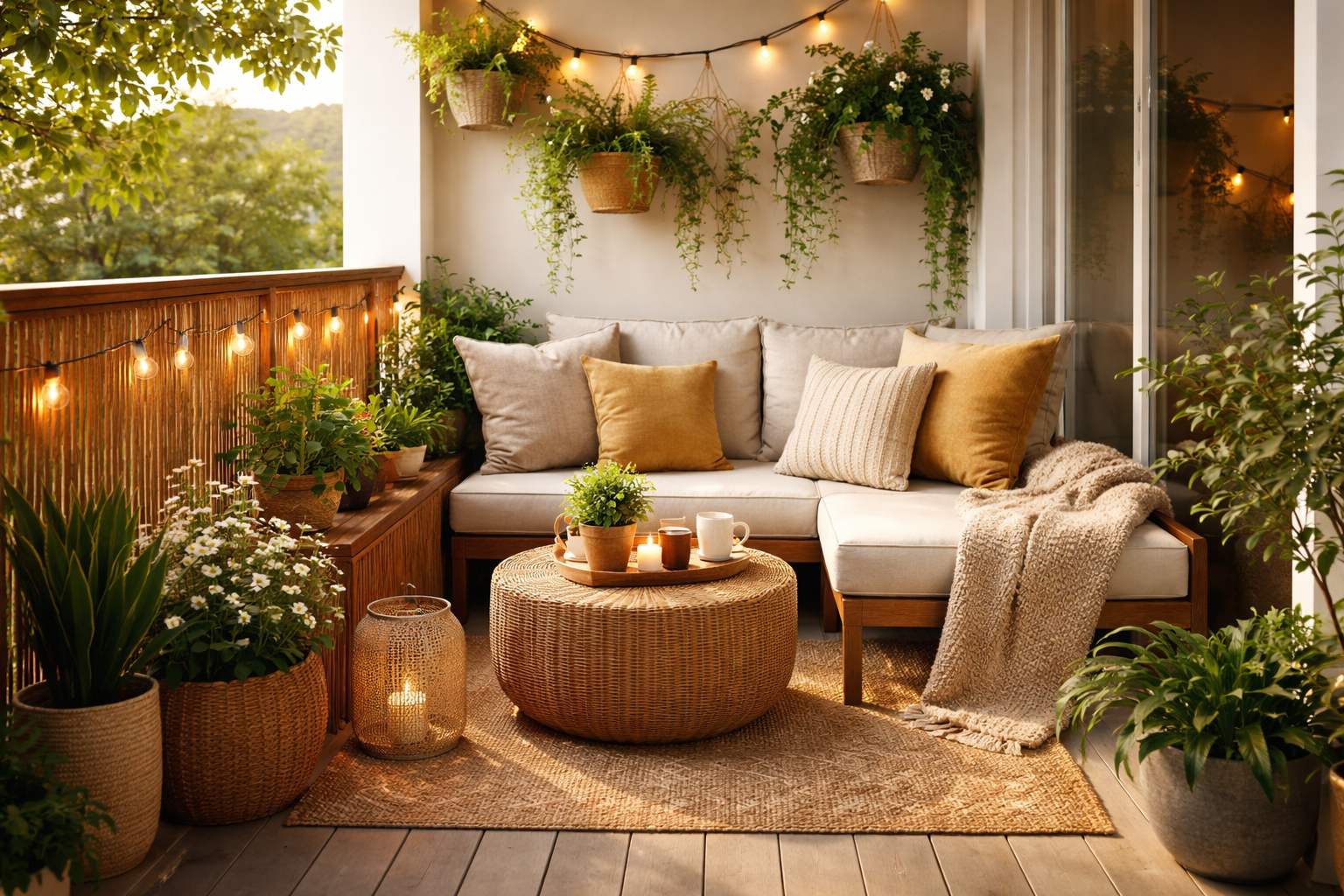
Small balcony areas can become comfortable outdoor spaces without being packed with furniture and decorations. The key is choosing pieces that earn their footprint while keeping enough open floor area for movement.
Instead of decorating every empty corner, decide what the balcony needs to do first. A reading spot, morning coffee area, or small plant retreat may require surprisingly little.
Choose One Main Use for the Balcony
A tiny balcony struggles when it is expected to become a dining room, garden, lounge, storage area, and entertainment space at the same time. Pick the activity you value most and design around it.
While browsing digital reading sources for general inspiration, keep your real measurements nearby. A furniture arrangement that looks compact in a photograph may still overwhelm a narrow balcony.
Measure the usable floor, doorway clearance, railing area, and the space needed to comfortably pull out a chair.
Use Furniture With a Small Visual Footprint
Bulky pieces can make a balcony feel crowded before anyone sits down. Slim chairs, compact stools, folding furniture, or a narrow table generally leave more breathing room.
Online web-based reading can provide endless decorating directions, but dimensions matter more than style labels. Mark proposed furniture sizes on the floor with removable tape before purchasing anything.
| Balcony Need | Space-Saving Choice | Crowding Risk |
|---|---|---|
| Seating | Folding chairs | Deep lounge seats |
| Table | Narrow café table | Wide dining table |
| Plants | Vertical grouping | Many floor pots |
| Storage | Compact closed box | Multiple loose bins |
Pieces that can fold or serve two purposes make it easier to change the layout when guests arrive.
Move Some Decoration Off the Floor
Floor space is usually the most limited resource on a small balcony. Rail planters, approved wall-mounted features, narrow shelves, or vertical plant stands can help keep walking areas clearer.
A general online content source may offer broader visual inspiration, but mounting methods should match the actual building and balcony. Check property rules before drilling, attaching items to railings, or installing anything that could fall.
Vertical design works best when it feels controlled. Covering every wall and railing can make the balcony feel smaller rather than larger.
Keep the Color and Material Mix Controlled
A compact area benefits from some visual continuity. Repeating two or three materials or tones can make separate furniture and plant containers feel like one composition.
That doesn’t mean everything has to match. A wood-toned table, neutral seat cushions, and varied greenery can still feel layered without creating visual noise.
Lighting should follow the same principle. One soft outdoor-rated light source may create more atmosphere than several decorative fixtures competing for attention.
Mistakes That Make a Balcony Feel Smaller
The biggest mistake is buying pieces individually without considering their combined footprint. A chair may look small in a store, yet two chairs, a table, four planters, and a storage box can quickly eliminate usable space.
Another problem is treating every blank surface as a place that needs decoration. Negative space is useful. An open corner or clear section of railing gives the eye somewhere to rest and makes the balcony easier to move through.
Frequently Asked Questions
What furniture works best on a narrow balcony?
Look for compact chairs, folding pieces, narrow tables, and furniture that doesn’t block the doorway. Measure first and preserve a comfortable path between the entrance and the seating area.
How can I add plants without losing floor space?
Group a few pots vertically using an appropriate plant stand, shelf, or permitted railing system. Choose placements that remain secure and don’t interfere with doors, walkways, or drainage.
Should a small balcony have outdoor storage?
Storage can help when it replaces loose clutter rather than adding another bulky object. A compact weather-suitable bench or box may work, provided it fits comfortably without restricting movement.
Leave Space for the Balcony to Breathe
Comfort on a small balcony comes from editing, not filling. Choose the main purpose, size every item carefully, and leave part of the floor deliberately open.
Once the layout works, add plants, textiles, and lighting slowly. A balcony that contains fewer well-chosen pieces often feels larger, calmer, and more useful than one trying to include every outdoor decorating idea.