
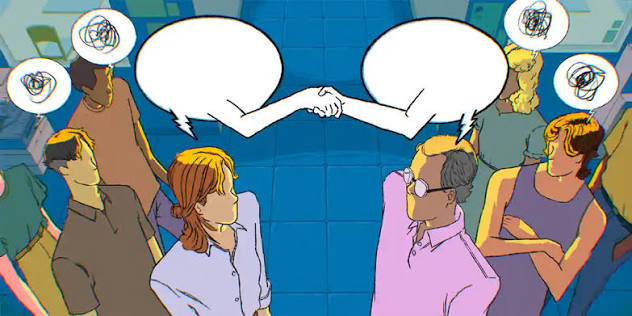
Poor conflict management can turn a manageable disagreement into a lasting team problem. Most workplace conflict doesn’t require dramatic intervention, but ignoring tension can allow frustration, assumptions, and informal alliances to grow.
Leaders should address meaningful conflict early enough to understand the disagreement while people are still willing to solve it.
Identify the Actual Point of Conflict
Arguments often begin around one topic while the real disagreement sits underneath it. Two employees may appear to disagree about a deadline when the deeper issue is unclear ownership or repeated last-minute requests.
Start by separating observable events from interpretations. “The file was submitted two days after the agreed date” creates a clearer discussion than “You never respect anyone else’s schedule.”
Managers exploring leadership decision framing may find this distinction useful because conflict becomes easier to discuss when the problem is defined around actions and decisions rather than personality.
Let Each Person Explain the Situation
A conflict discussion should give both sides enough room to describe what happened, what they expected, and what needs to change.
The goal isn’t to decide immediately who is the better employee. It is to identify the working problem.
| Conflict Signal | Possible Issue | Useful Response |
|---|---|---|
| Repeated missed handoffs | Ownership unclear | Define responsibility |
| Sharp meeting exchanges | Frustration building | Discuss privately |
| Work being duplicated | Roles overlap | Clarify boundaries |
| People avoiding each other | Trust has dropped | Address unresolved issue |
Listening doesn’t require agreeing with every interpretation. It helps leaders understand why each person believes the situation happened.
Agree on Specific Behavior Changes
Conflict resolution becomes weak when it ends with “communicate better.” People leave without knowing what should actually happen differently.
A stronger agreement might be: “Send changes before noon when possible, and call directly if an urgent request affects the same-day deadline.”
Considering broader operational focus concepts can also help managers move the conversation from blame toward practical working conditions. Teams perform better when responsibilities and expectations can be observed rather than guessed.
Write Down Important Agreements
For meaningful recurring conflict, summarize the agreed actions afterward. A short written note reduces future arguments about what was decided.
Keep the language neutral and focused on work.
Watch What Happens After the Conversation
One meeting rarely proves that conflict has been resolved. Leaders should pay attention to whether the agreed behavior actually changes.
A brief follow-up may be enough: “Has the new handoff process helped?” This gives employees a chance to surface remaining friction before resentment returns.
Reading about broader leadership development themes can provide context for viewing conflict management as an ongoing leadership skill rather than a one-time intervention.
Follow-up also shows that respectful agreements matter after the meeting ends.
Where Conflict Management Goes Wrong
Avoiding tension because everyone appears polite is risky. People can remain professionally quiet while cooperation deteriorates behind the scenes.
Taking sides too quickly creates a different problem. Leaders who accept the first version they hear may unintentionally reward escalation.
Publicly correcting interpersonal conflict can also increase defensiveness. Unless the issue affects the whole group and genuinely requires group discussion, sensitive disagreements are usually easier to address in a more focused setting.
Frequently Asked Questions
Should managers step into every workplace disagreement?
No. Employees can resolve many small differences themselves. Managers should become more involved when conflict repeatedly affects cooperation, deadlines, communication, customers, or the wider team’s ability to work.
What if both employees believe they are right?
Focus first on the future working arrangement. Different interpretations of the past can exist while people still agree on clearer responsibilities, communication rules, and next steps.
Can healthy teams still have conflict?
Yes. Disagreement can expose weak processes, competing priorities, or useful differences in perspective. The quality of the response matters more than trying to eliminate all disagreement.
Resolve the Work Problem Before It Spreads
Team conflict becomes harder to manage when frustration turns into a pattern. Address the specific behavior, hear both perspectives, and agree on changes that people can actually follow.
Early, calm intervention doesn’t guarantee complete agreement. It gives the team a fair chance to solve tension before the disagreement begins shaping relationships around it.