
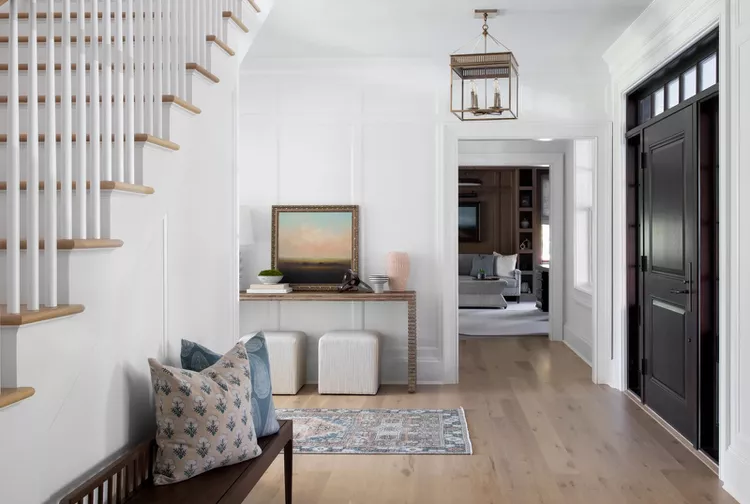
A small entry can become crowded quickly because shoes, coats, bags, keys, and deliveries all compete for the same few feet. The solution is not necessarily adding more furniture.
Narrow entryway areas work best when storage uses walls, shallow depths, and overlooked vertical space while leaving the main walking path open.
Measure the Walking Path First
Before buying storage, measure the width of the entry and note where doors swing. A cabinet that technically fits may still make the space uncomfortable once people are carrying groceries or opening the front door.
Browsing compact-home inspiration can spark ideas, but measurements should decide what enters the space. Mark proposed furniture depth on the floor with painter’s tape before purchasing anything.
Protect the Busiest Movement Zone
Notice where people naturally step when entering, removing shoes, or reaching for a light switch. That area should remain as clear as possible.
Storage works better along unused edges than in the center of the traffic pattern.
Choose Shallow Storage Over Deep Furniture
Slim shoe cabinets, narrow consoles, and wall-mounted shelves can provide useful storage without consuming much floor area. Depth matters more than overall width in many tight entries.
People exploring storage planning resources may see large hallway units, but a smaller piece often performs better in a constrained home because it preserves movement.
| Storage Choice | Space Used | Best For |
|---|---|---|
| Wall hooks | Minimal floor space | Coats and bags |
| Slim shoe cabinet | Shallow footprint | Everyday footwear |
| Floating shelf | Wall only | Keys and mail |
| Small bench | Moderate floor space | Seating plus storage |
Use the Wall From Waist Height Up
Walls often hold the unused capacity in a narrow entry. Hooks can keep bags off the floor, while a floating shelf can create a landing spot for keys without adding legs.
A mirror with a small ledge can serve two functions in the same footprint. Looking through home organization viewpoints may provide ideas, but avoid filling every vertical surface simply because it is available.
Give Everyday Items Priority
The entry should serve the things used most often. Shoes worn once a month do not need premium space beside the door.
Store daily shoes, one or two frequently used bags, current-season outerwear, and keys near the entrance. Move backup items to bedroom closets, under-bed storage, or another less convenient area.
Where Small Entryway Storage Fails
The biggest mistake is treating every empty inch as a storage opportunity. Too many hooks, baskets, shelves, and decorative objects can make a narrow hallway feel tighter even when everything technically has a place.
Oversized benches are another common problem. Seating sounds useful, but a deep bench may block circulation more than it helps. A folding seat or very shallow perch can be a better compromise.
Frequently Asked Questions
How deep should furniture be in a narrow entryway?
There is no single ideal measurement because hallway widths differ. Choose the shallowest piece that holds what you actually need, then confirm that doors and people can still move comfortably around it.
What can replace an entryway table?
A floating shelf, wall-mounted pocket organizer, narrow ledge, or small corner shelf can provide a landing zone without taking the floor space used by a traditional table.
How do I organize shoes in a tiny entrance?
Keep only frequently worn pairs near the door. Use a slim cabinet, vertical rack, or individual shelf, then move seasonal and occasional shoes to another storage area.
Keep the Route Clear
A good narrow entry should feel easier to pass through after storage is added, not harder. Start with circulation, then give the remaining space specific jobs.
A few shallow, well-placed pieces usually outperform a large collection of organizers. Protect the walking path and let storage support it rather than compete with it.