
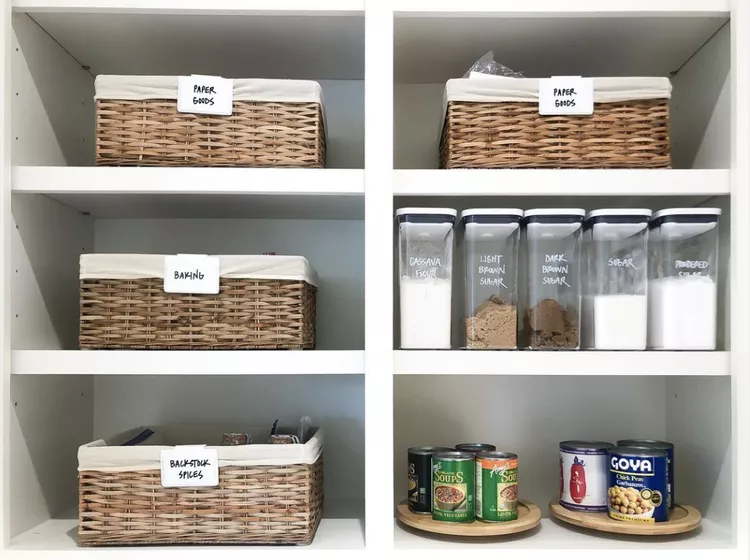
Small pantry shelves often feel crowded because packages use space inefficiently, not because the pantry is completely full. Oversized boxes, half-empty bags, mismatched containers, and forgotten items can consume valuable shelf depth.
Better containers help most when they match the dimensions of the pantry and the foods you actually store. The goal is usable capacity, not rows of decorative jars.
Measure Before Buying Containers
Measure shelf width, depth, height, and the vertical gap between shelves before shopping. Pay attention to hinges, door frames, pipes, shelf brackets, or other features that reduce usable space.
Write those measurements down. Buying attractive organizers first and discovering that they waste three inches behind every container turns an organization project into another storage problem.
| Storage Problem | Better Container | Main Benefit |
|---|---|---|
| Deep shelves | Pull-out bin | Easier rear access |
| Loose packets | Narrow basket | Keeps small items together |
| Tall unused gap | Stackable container | Uses vertical space |
| Open bags | Sealed food container | Controls spills and clutter |
Match Container Shape to Shelf Depth
Deep shelves can swallow small packages. Pull-out bins let you bring the rear of the shelf forward instead of moving five products to reach one item.
Ideas found across general media sites can provide inspiration for home projects, but pantry dimensions should decide what you actually buy. A perfectly organized twelve-inch-deep pantry may use completely different products from a twenty-inch-deep cabinet.
Square and rectangular containers usually sit together more efficiently than heavily tapered or round designs.
Group Small Items Into Categories
Snack bars, seasoning packets, baking decorations, drink mixes, and small pouches quickly create visual disorder when each item sits separately. A few categorized bins can turn dozens of loose objects into manageable groups.
Home organization sometimes appears in headline collections as a dramatic before-and-after project. The more useful test comes later: can someone find an item and return it without reorganizing everything else?
Keep categories broad enough to remain practical. “Baking” may work better than separate bins for chocolate chips, sprinkles, decorating tools, and every other small ingredient.
Decant Only Foods That Benefit From It
Removing pasta, rice, flour, cereal, or dry snacks from bulky packaging can save space when containers stack efficiently. It can also make remaining quantities easier to see.
Yet decanting everything creates extra work. While online magazine content may offer endless organizing inspiration, a household doesn’t need matching containers for cans, unopened jars, or products already packaged efficiently.
If you decant food, preserve preparation directions, expiration details, allergen information, or other package information you may need later.
Use Height That Usually Goes to Waste
Short cans sitting beneath a tall shelf opening leave usable vertical space above them. Shelf risers, stackable bins, and appropriately sized containers can recover that area.
Door-mounted organizers may also work for lightweight products when the pantry design allows them. Avoid overloading doors or adding an organizer that prevents shelves from closing properly.
The overlooked issue isn’t always insufficient storage. Sometimes too much space is assigned to rarely used products while everyday items compete for the easiest shelves.
Where Pantry Organization Often Fails
Buying identical containers for appearance rather than function can reduce capacity. Containers with wide lids, sloped sides, unnecessary handles, or dimensions that don’t match the shelf may waste more room than the original packaging.
Another mistake is filling every inch. A pantry needs a little working space so items can be removed, restocked, and rearranged without dismantling an entire shelf.
Frequently Asked Questions
Are clear containers better for a small pantry?
They can help because quantities are visible without opening containers. Clear storage isn’t essential, however. Labels can make opaque bins equally practical when they fit the shelf better.
Should pantry containers all be the same size?
No. Different foods need different volumes. A small selection of compatible sizes usually uses space more efficiently than forcing every ingredient into identical containers.
How do I organize a very deep pantry shelf?
Use pull-out bins or trays for products stored toward the back. Keep frequently used items near the front and reserve rear areas for backups or less frequently needed supplies.
Build a Pantry You Can Maintain
A small pantry works best when every storage choice answers a practical problem. Measure first, group loose items, use vertical space, and decant only where it saves meaningful room. Leave enough open space to use the shelves comfortably.
The best organization system isn’t the one that looks perfect on setup day. It’s the one that still makes sense after an ordinary grocery trip.