
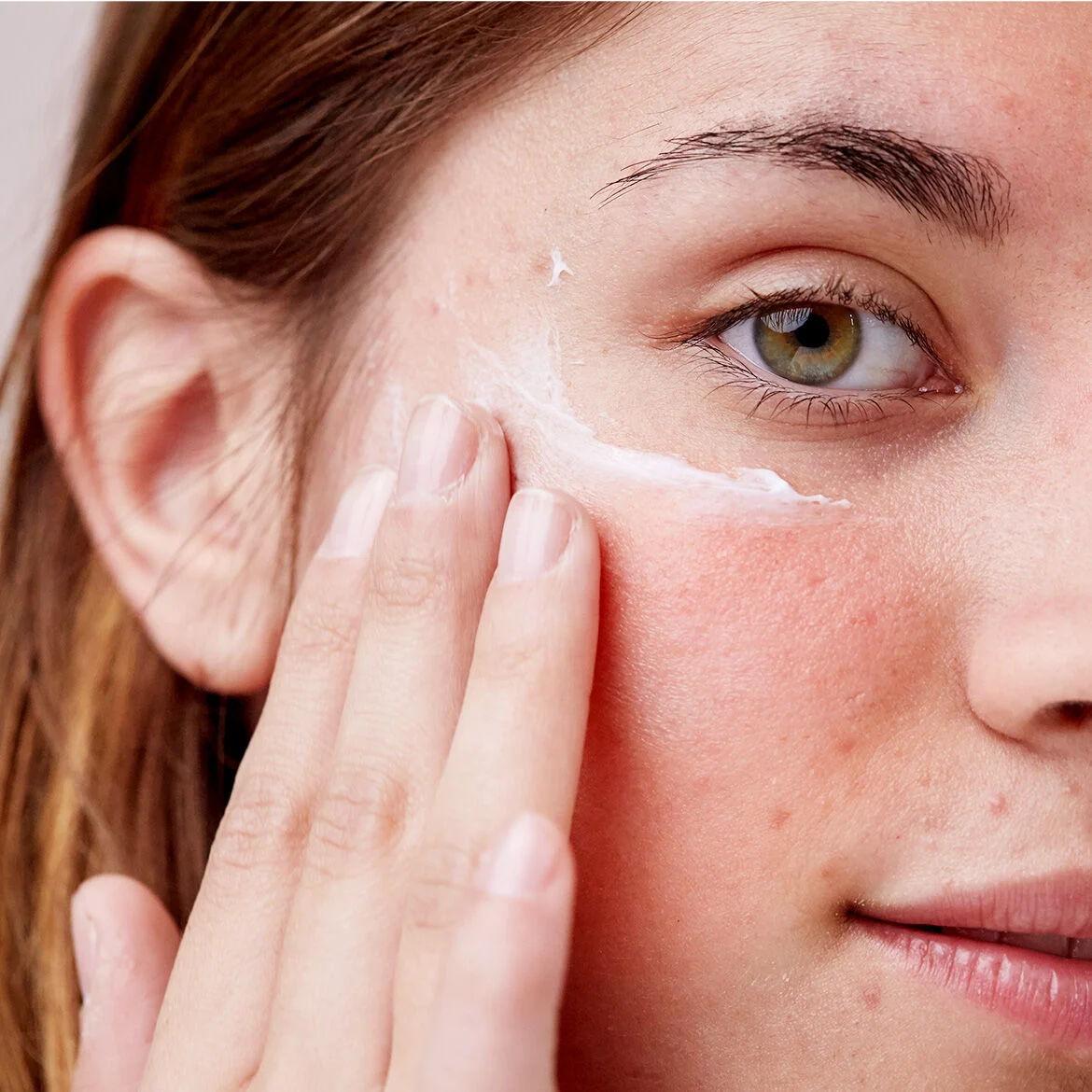
Sensitive face redness can worsen when an already reactive skin barrier is repeatedly exposed to strong cleansers, fragrances, scrubs, acids, or other irritating products. Simplifying the routine often makes it easier to identify what the skin tolerates.
Redness itself is not a diagnosis, however. Several skin conditions and allergic or irritant reactions can produce a similar appearance.
Start by Removing Unnecessary Irritation
If facial skin is burning, stinging, or becoming increasingly red, adding more active products can make the situation harder to understand. A simple cleanser, moisturizer, and suitable sunscreen may be easier on reactive skin.
Online broader skin-care reading can introduce many possible causes, but changing several products at the same time makes it difficult to identify which one is contributing to irritation.
Choose Fragrance-Free, Gentle Products
Fragrance, strong exfoliating ingredients, toners, and abrasive scrubs can bother sensitive facial skin. Products marketed as gentle can still cause reactions, so how your own skin responds matters.
The American Academy of Dermatology recommends gentle skin care for rosacea-prone skin and lists fragrance, alcohol, menthol, camphor, and several exfoliating ingredients among potential irritants. It also recommends fragrance-free products rather than relying on the term “unscented.”
Introduce Products One at a Time
Patch testing a new skin-care product on a small area before broader use can help reveal some reactions. The AAD provides product-testing guidance for people who are concerned about irritation.
A slow introduction also makes troubleshooting easier because you know which product changed.
Treat the Skin Gently During Cleansing
Use fingertips rather than rough washcloths or brushes, and rinse cleanser completely from the skin. Hot water and vigorous rubbing can leave sensitive skin feeling hotter or tighter.
General routine safety information may encourage careful product habits, but persistent facial redness should not be managed solely by trial and error if symptoms continue.
| Trigger Pattern | Possible Effect | Gentler Choice |
|---|---|---|
| Harsh cleanser | Tightness, stinging | Mild cleanser |
| Fragrance | Irritation or reaction | Fragrance-free product |
| Scrubbing | Increased redness | Fingertip cleansing |
| Multiple actives | Burning or peeling | Simplified routine |
Sun Protection Deserves Attention Too
Sun exposure can worsen redness in people with rosacea and can irritate already sensitive skin. A broad-spectrum sunscreen with SPF 30 or higher is commonly recommended, along with shade and protective clothing.
Someone exploring lifestyle health resources may find many skin-care routines, but a shorter routine is often easier to tolerate when facial skin is actively irritated.
What Redness Doesn’t Automatically Mean
A red face does not automatically mean rosacea. Contact dermatitis, eczema, acne-related irritation, sun exposure, heat, and other conditions can all produce facial redness.
The AAD notes that contact dermatitis can occur when something touching the face either irritates the skin or triggers an allergic reaction. Determining the cause can be difficult because even previously tolerated products can sometimes become problematic.
When Should Facial Redness Be Evaluated?
See a clinician or dermatologist when redness is persistent, worsening, painful, associated with significant swelling, recurrent bumps, visible blood vessels, eye irritation, or a rash that does not settle after suspected irritants are removed.
Sudden facial swelling with difficulty breathing or other signs of a severe allergic reaction requires emergency medical attention.
Frequently Asked Questions
Can sensitive skin suddenly become red from an old product?
Yes. Irritation can develop after repeated exposure, and allergic contact reactions can also appear after a period of previous tolerance. Persistent reactions may require help identifying the responsible ingredient.
Should I exfoliate when my face is red?
Active redness, burning, or stinging is generally a reason to avoid aggressive exfoliation. Scrubs and strong acids may add irritation while the skin is already sensitive.
Can sunscreen make facial redness worse?
Some formulas may sting sensitive skin. People who react to sunscreen may tolerate mineral products containing zinc oxide or titanium dioxide better, although individual responses still vary.
Simplify Before Adding More
Sensitive facial skin often benefits from fewer variables. Remove obvious irritants, introduce new products slowly, cleanse gently, moisturize appropriately, and protect the skin from excessive sun exposure.
If redness repeatedly returns or remains unexplained, avoid endlessly switching products. Getting the underlying cause identified can prevent months of unnecessary irritation.
This article is for general informational purposes and is not a substitute for professional medical advice, diagnosis, or treatment.