
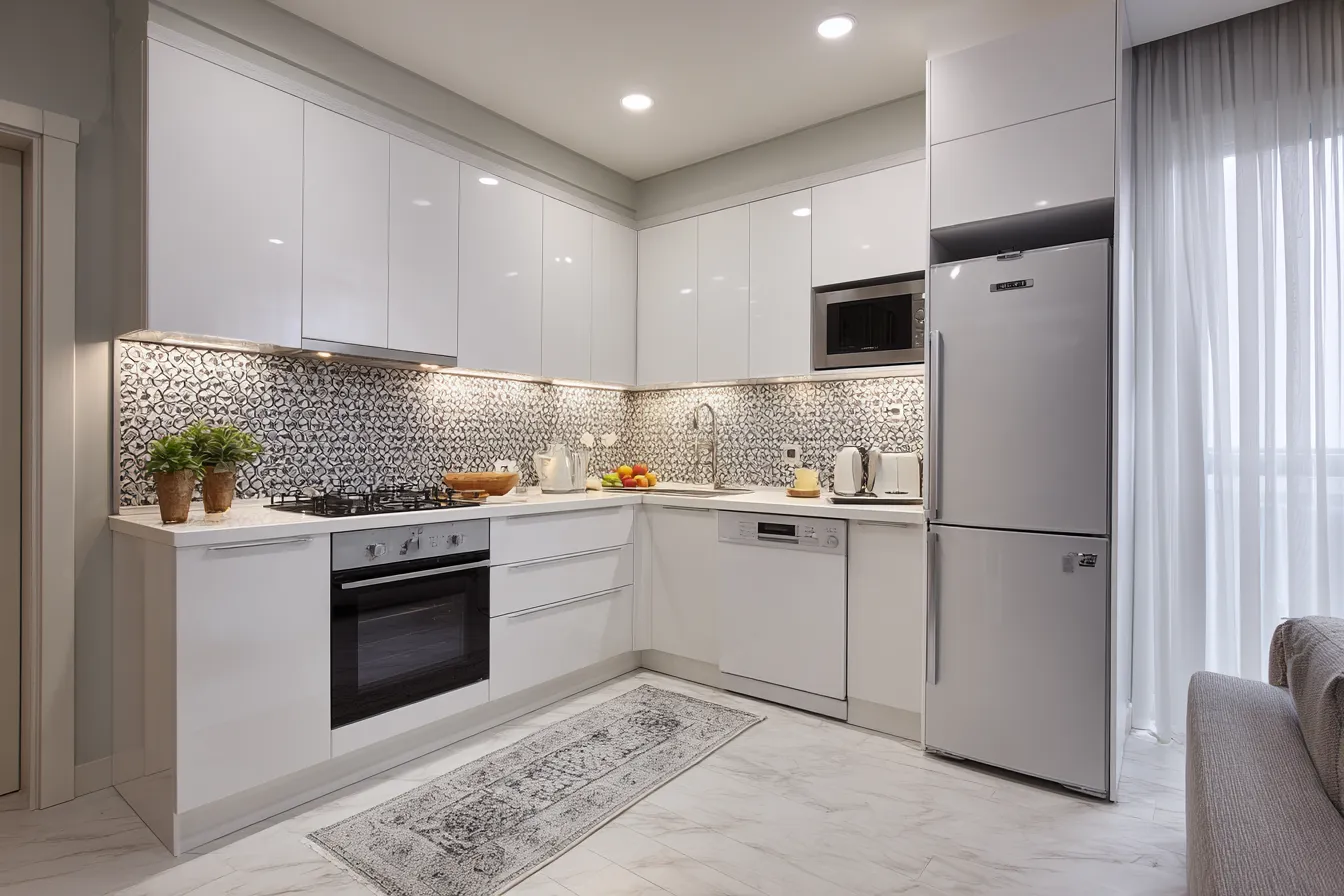
A narrow kitchen doesn’t automatically need more floor space. It often needs fewer obstacles. Improving movement starts by keeping frequently used items close to where they’re needed, moving storage upward instead of outward, and protecting the main walking path from doors, stools, bins, and countertop clutter.
Good storage should shorten movement, not merely hide more belongings.
Protect the Main Traffic Path
Walk through the kitchen as if you’re preparing an ordinary meal. Notice where cabinet doors, refrigerator doors, people, and movable furniture repeatedly interrupt the route.
That exercise often reveals more than measurements alone. A narrow kitchen becomes frustrating when several small obstacles compete for the same strip of floor.
Remove unnecessary freestanding pieces first. A slim trolley sounds useful, for example, but it can make a tight galley kitchen noticeably harder to use.
Store Items Around the Task
Keep cookware near the range, everyday dishes near the dishwasher or drying area, and preparation tools near the main work surface. This reduces unnecessary crossing from one side of the kitchen to the other.
Browsing home-improvement inspiration may produce dozens of storage products, but location matters more than quantity. A perfectly organized pan stored far from the stove still adds wasted movement every time dinner is prepared.
Give Prime Space to Everyday Items
The easiest drawers and shelves should hold things used daily. Holiday platters, duplicate appliances, and rarely used serving pieces can occupy harder-to-reach storage.
That simple ranking makes existing cabinets feel larger.
Use Vertical Space Before Adding Furniture
Wall height is valuable in a narrow room. Tall cabinetry, shelves above less-used areas, magnetic organizers, hooks, and inside-door storage can increase capacity without shrinking the walkway.
Ideas found through daily design ideas can help identify unused surfaces, but don’t fill every wall simply because space exists. Visual crowding can make a narrow kitchen feel tighter even when the floor remains clear.
| Storage Problem | Smarter Location | Movement Benefit |
|---|---|---|
| Pans far from stove | Lower cabinet near range | Fewer repeated steps |
| Utensils on counters | Drawer or rail nearby | Clearer worktop |
| Rare appliances accessible | Upper/deep storage | Prime space is freed |
| Cleaning items scattered | Sink-area cabinet | Faster cleanup |
Choose Storage That Doesn’t Fight the Room
Pull-out pantry systems, shallow shelving, narrow drawer organizers, and cabinet inserts can make deep spaces easier to use. The useful product is the one that improves access without creating another obstruction.
Readers comparing practical layout reading may notice that kitchen organization often focuses on fitting more inside cabinets. In a narrow layout, however, reducing what must be stored can be equally valuable.
Review duplicate mugs, unused gadgets, mismatched containers, and oversized appliances before buying additional organizers.
Where Storage Solutions Can Make Things Worse
More storage isn’t automatically better. Deep shelves can encourage forgotten clutter, oversized cabinet handles can catch clothing in tight passages, and too many hanging organizers can intrude into usable space.
Open shelving has its own tradeoff. It can make frequently used dishes easy to reach, yet crowded shelves create visual noise and require regular cleaning.
The best narrow kitchen isn’t the one holding the most objects. It is the one allowing everyday cooking without repeated obstacles.
Frequently Asked Questions
What is the best storage for a narrow galley kitchen?
Prioritize tall cabinets, shallow shelves, drawer organizers, and storage placed close to specific tasks. Avoid bulky freestanding units that consume valuable floor width unless the walkway remains comfortably usable.
Should narrow kitchens use open shelving?
Open shelving can reduce the visual heaviness of upper cabinets and keep daily items accessible. It works best when the shelf contents stay limited, organized, and easy to clean.
How can I create more counter space in a small kitchen?
Remove rarely used appliances, store utensils vertically or inside drawers, and consider fitted solutions such as an over-sink work surface where practical. Protect the main preparation zone from becoming permanent storage.
Make Every Step More Useful
Before adding cabinets or organizers, remove the obstacles that interrupt normal cooking. Then position everyday items around the places where they’re actually used and move occasional items into secondary storage. In a narrow kitchen, a few fewer steps and a consistently clear passage can improve the room more than another cabinet ever will.