
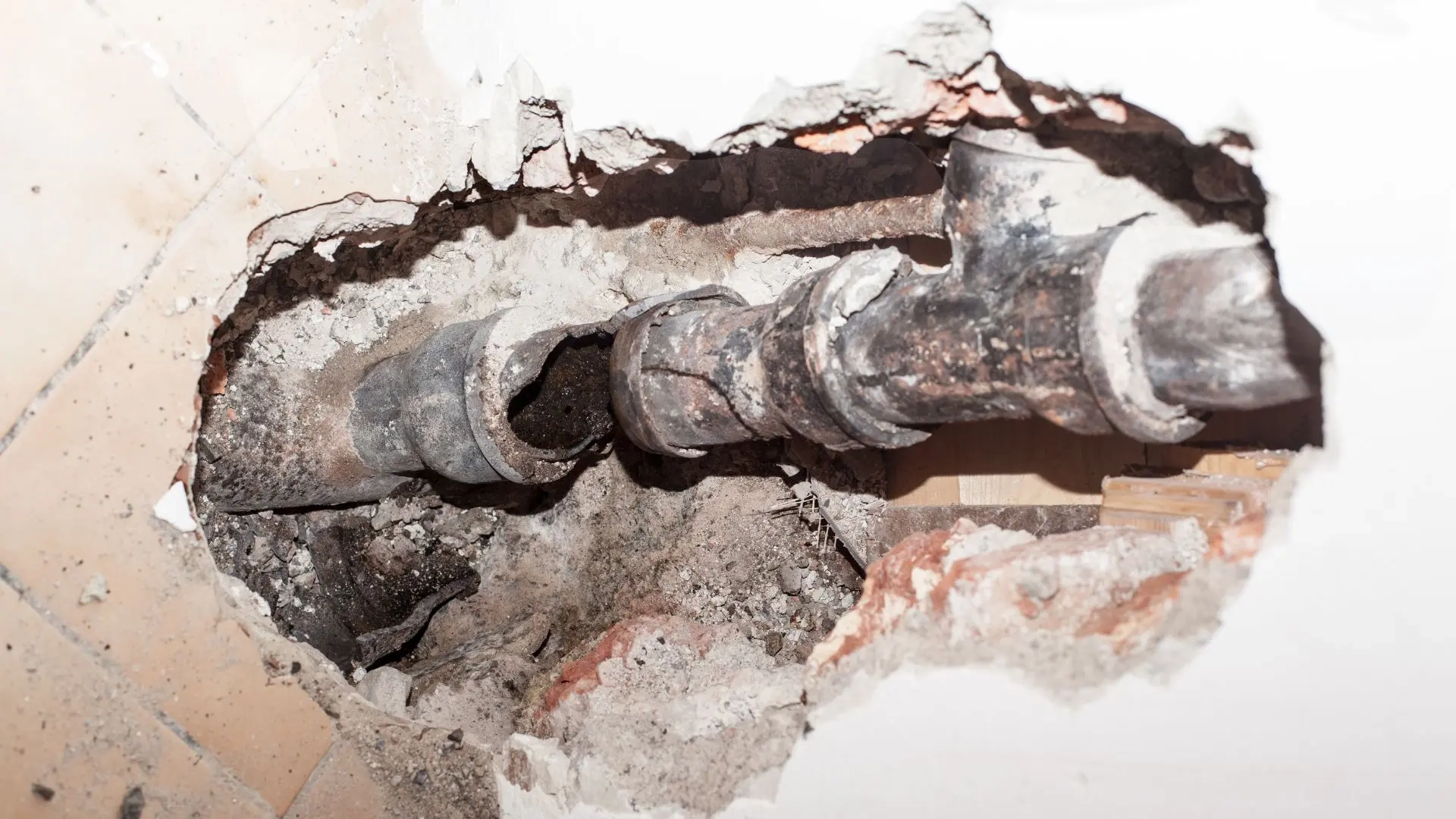
When a pipe bursts, the luxury of time is simply not on your side. Water moves fast, seeping into every nook and cranny, finding every little gap it can. And with the damage compounding by the minute, the stakes couldn’t be higher. Here’s what to do from the moment you discover the leak until the end of week one of recovery.
Stop the water before anything else
Locate your home’s primary water shut-off valve and close it. If you’re unsure where to find it, you might have luck in the basement or crawlspace near the front of your house, on the side closest to the street (in colder climates, the shut-off is typically inside to prevent freezing). Otherwise, check the garage, the water heater closet, the crawlspace near the water heater, or under the sink in the kitchen or bathroom. Some homes have a second shut-off for the outside spigot.
Cut the power to flooded zones
Before entering standing water, visit your breaker panel and turn off electricity to all circuits that cover the affected area. Floor outlets, power strips on the floor, and any appliances that could have been touched by water all become serious hazards the instant electricity is still flowing.
Don’t assume that the water didn’t come in contact with anything electrical because it appears to be only a few inches deep. Water flows under doors, follows the contour of the floor, and wicks up walls. Kill the power first. If you’re not sure which breakers cover the area, turn off the main.
Start extraction immediately – and know when to call for help
Remove water quickly. Use wet vacuums and mops for minor floods. A basement with several inches of water from a burst pipe will need a sump pump to suck water out fast.
After you have extracted the water, it’s the trapped water that causes the damage. And it’s amazing how fast water can travel. It will flow behind baseboards, under subfloors, within wall cavities, and seep up inside ceiling supports. Ordinary box fans can’t reach those places. This is when many do-it-yourselfers throw in the towel and call the mold remediation crew.
For anything more than a very small, localized flood, professional extraction and drying is the only option. A company that handles Water Damage Restoration Salt Lake City will use thermal imaging and commercial extraction equipment to locate and remove moisture that has become trapped in those hard-to-reach areas. The science of drying – monitoring temperature, airflow, and relative humidity throughout the structure – requires equipment that measures what you can’t see.
Document everything before you touch it
You will need to document the damage for your homeowners insurance policy. Before you pick up even a single water-soaked object or begin any demolition, record the state of the affected area. Film and photograph the site of the broken pipe, the amount of standing water, any waterlogged walls or ceilings, and any of your possessions showing damage because they have been exposed to water or are sitting in the water.
Insurers must be able to view the damage before any restoration or cleanup work is begun. If you remove objects or water the adjuster does not have the opportunity to assess some of the most basic aspects of your damage and may even conclude that you have not suffered any.
Understand what type of water you’re dealing with
All pipe bursts may seem similar, but that’s not the case. A broken supply line brings about Category 1 water or clean water, which has a low immediate threat to health during cleanup, which you can manage with basic gloves and boots. If the burst was from a drain line, toilet supply, or any fixture connected to sewage, then it is graywater or blackwater contamination, which requires full protective gear like N95 masks, goggles, and disposable coveralls, with a more aggressive cleanup protocol and more to-be-discarded materials.
Set up aggressive drying within the first 24 hours
Mold and mildew may start to develop on wet surfaces in just 1 to 2 days. When walls and subfloors are wet, that time gets shortened.
High-speed air-moving fans and industrial dehumidifiers have unique functions. Fans drive moisture from materials into the air while dehumidifiers take that moisture out of the air. It’s essential that both operate simultaneously, instead of just pointing fans at the ground.
In case the weather allows, keep the windows open – low humidity outside can be beneficial. If the humidity is high outside, it’s better to keep the windows shut and allow the dehumidifiers to perform their function.
Sort materials: what stays and what goes
Items made of solid wood, metal, and glass can typically be dried out, cleaned, and kept. But heavily saturated carpet, carpet padding, and standard drywall generally can’t. All of these porous materials hold water and moisture deep within their structure. Once the mold spores start to reproduce, they are almost impossible to control. The only solution is to cut them out and throw them away.
Subfloor damage is the number one thing homeowners overlook. Water sits underneath the tile or hardwood and the subsurface material is destroyed. Unfortunately, this does not show obvious signs until your floor starts to squeak, warp, or even feel spongy. If you’ve had water for more than a few hours, get the floor covering pulled up and see what’s underneath.
The days after
Between days two to seven, the main focus changes from extracting the water to monitoring the situation and starting tear-out work where necessary. You will continue to run your dehumidifiers and you should also start regularly taking moisture readings in the walls and floors of your home.
You should also be on the lookout for any areas of discoloration, musty odors, or soft, sponge-like areas that can indicate where hidden structural damage is occurring.
Typically, air scrubbers with HEPA filters are useful anytime you’re doing tear-out work – cutting into waterlogged drywall will release a lot of mold spores and dust into the air which you want to try and contain as much as possible.
A pipe burst is a repair if it is properly estimated and managed in the first day or two. However, if underestimated, it becomes a much larger mold remediation project that might not begin until months down the line. The aggressive response determines which of the two you’re dealing with.
